Investigating the Significance of Metal Foundries in Industrial Processes
Metal casting facilities are vital in the domain of industrial production. They convert raw materials into essential components that benefit various sectors, from automotive to aerospace. Sophisticated casting processes allow for the manufacturing of durable parts that significantly improve performance and safety. However, as they integrate modern advancements and face ecological pressures, the future of these foundries remains uncertain. The road forward for this vital sector deserves careful consideration.
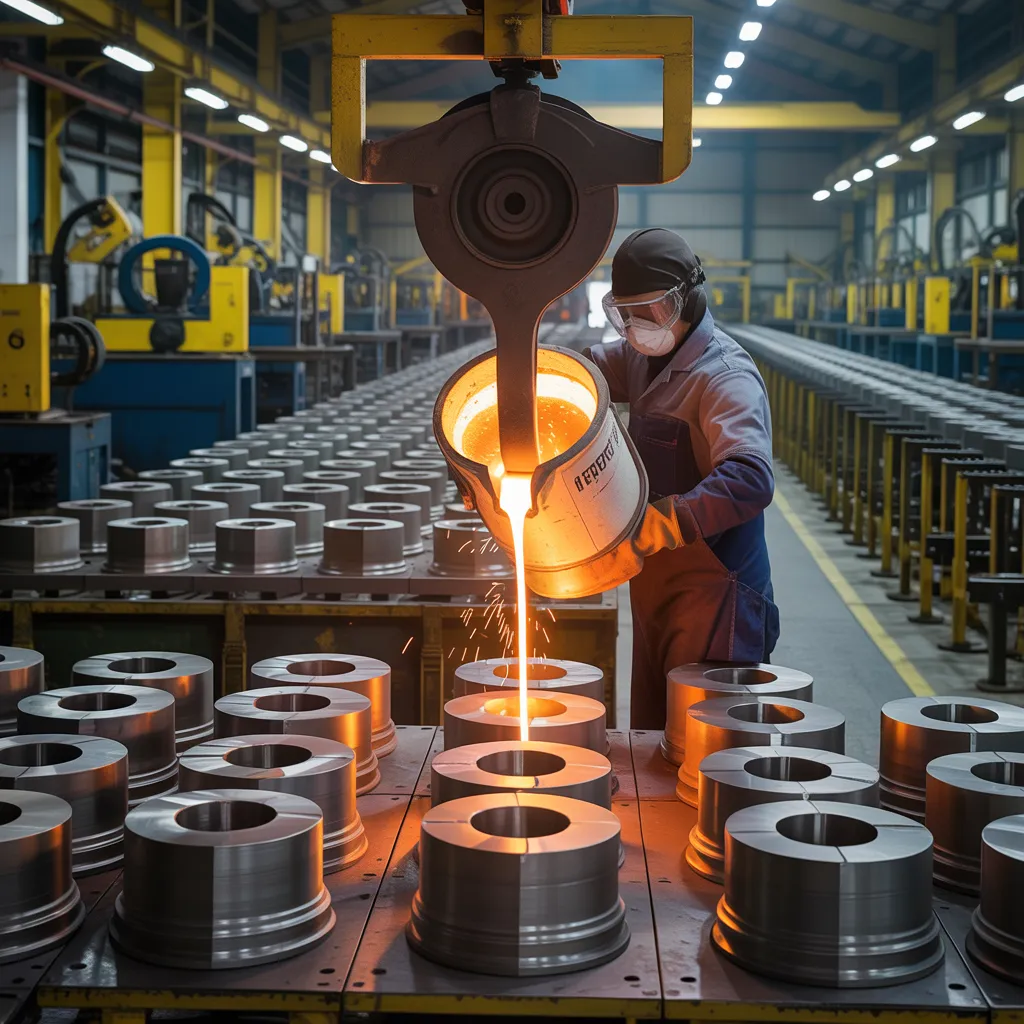
A Guide to Understanding the Metal Casting Process
The metal casting process transforms molten metal into finished solid components using a variety of methods. It begins with the melting of metal, commonly performed in a furnace, until it achieves a temperature appropriate for casting. When liquefied, the metal is cast into a mold, which determines the form of the finished product. Several approaches such as sand casting, investment casting, and die casting are employed, with each providing distinct benefits in terms of precision and complexity.
The cooling process begins as the melted metal sets within the mold, allowing it to take on the desired shape. Following the solidification process, the mold is removed, and the casting is commonly exposed to refinement procedures like machining or surface treatment to enhance its properties. Comprehending these essential stages is critical to improving operational performance and ensuring the quality of the finished products, making the metal casting process an integral part of contemporary industrial production.
The Historic Development of Metalworking Foundries
As cultures evolved, the advancement of metal foundries played a crucial role in technological advancement. Initially, ancient societies employed simple smelting techniques to obtain metals from mineral ores, with proof of copper and bronze casting going back to 4000 BCE. The introduction of iron casting circa 1200 BCE signified a pivotal change, allowing for the production of more durable tools and weapons.
In the Middle Ages, metalworking foundries progressed considerably with the development of sophisticated furnaces and molds, enabling increased production efficiency. The period of the Renaissance witnessed the incorporation of scientific principles into metalworking, enhancing both quality and precision.
The Industrial Revolution catalyzed the rapid expansion of metal foundries, as steam power and industrialization reshaped production potential. By the late 19th century, foundries grew indispensable to a wide range of industries, supplying essential parts for transportation, machinery, and infrastructure. This historical trajectory underscores the fundamental role of metal foundries in shaping modern industrial landscapes.
Applications of Metal Casting in Industry
Metal casting serves a critical function in numerous industries, markedly impacting industrial manufacturing. In the automotive sector, it is crucial for manufacturing components that enhance vehicle performance and safety. Similarly, applications in the aerospace industry and construction equipment manufacturing demonstrate the flexibility and critical role of metal casting in today's industrial production.
Vehicle Component Fabrication
In automotive component manufacturing, metal casting plays a essential role in manufacturing critical components that demand durability and accuracy. This technique enables the formation of intricate shapes, which are indispensable in components like suspension parts, engine blocks, and transmission housings. By employing metals like aluminum and iron, manufacturers are able to develop parts that balance low weight with durability that boost vehicle capability and fuel economy. Modern casting methods, such as sand casting and die casting, enable high-volume production while maintaining tight tolerances. Moreover, the capability to reclaim metal scrap within manufacturing facilities promotes environmental responsibility in automotive manufacturing. As automobiles advance with emerging innovations, the demand for innovative casting solutions continues to grow, highlighting the essential role of metal foundries in automotive component manufacturing.
Aerospace Industry Implementations
The aviation sector depends greatly on metal casting to produce essential parts that necessitate superior strength and minimal weight. Components such as turbine blades, structural frames, and engine parts are frequently manufactured using innovative casting processes. These methods allow for complex configurations that enhance aerodynamics and performance while reducing overall weight. Materials such as aluminum, titanium, and superalloys are frequently employed due to their favorable strength-to-weight ratios and ability to withstand extreme heat. Furthermore, exact casting processes ensure precise tolerances, which are crucial for safety and efficiency in aerospace uses. As the sector evolves, advancements in casting methods continue to improve component performance, resulting in more fuel-efficient and reliable aircraft designs. This emphasizes the essential function of metal casting facilities in supporting aerospace advancements.
Heavy Equipment Components
Many components used in construction equipment are produced through metal casting, highlighting its pivotal role in the industry. Fundamental parts such as engine blocks, transmission housings, and chassis components rely on the accuracy and strength that casting delivers. The technique supports complex geometries, which are vital for the smooth operation of heavy machinery. Additionally, metal casting materials such as ductile iron and steel supply the adequate strength to handle harsh working conditions. The ability to produce large quantities of parts with uniform quality further enhances the reliability of construction equipment. As the demand for efficient and robust machinery expands, the metal foundry sector remains integral to propelling construction technologies, ensuring that equipment satisfies industry standards and operational requirements.
Innovative Technologies Revolutionizing Foundry Production
As the push for greater manufacturing efficiency and precision increases, cutting-edge technologies are revolutionizing foundry operations. Sophisticated automation, especially through robotic systems, is improving the precision and efficiency of metal casting operations. These robotic systems can perform repetitive tasks with minimal error, reducing labor costs and improving output consistency.
Additionally, the adoption of 3D printing has revolutionized mold manufacturing, enabling rapid prototyping and sophisticated geometries that conventional methods are unable to achieve. This advancement not only shortens development timelines but also limits wasteful material use.
Data analytics and the Internet of Things (IoT) are revolutionizing operations by facilitating live monitoring of machinery and operational processes. These technologies facilitate predictive maintenance, reducing downtime and enhancing overall productivity.
In combination, these innovations are reshaping the landscape of foundry operations, driving manufacturers towards greater efficiency and precision in a competitive industrial environment.
Reasons Sustainability is Essential in Metal Foundries
Whereas metal foundries have long concentrated on production efficiency and cost-effectiveness, the growing focus on sustainability is transforming industry priorities. As international recognition of environmental challenges increases, foundries are recognizing the need to minimize their ecological footprint. This change is propelled by regulatory demands, consumer interest in greener products, and the enduring financial rewards of adopting sustainable practices.
Integrating energy-saving technologies and recycling materials not only conserves resources but also reduces operational costs. Additionally, implementing environmentally responsible practices enhances the reputation of metal foundries, attracting partnerships and customers who prioritize environmental responsibility.
Environmental responsibility in metal foundries additionally drives innovation; businesses are investigating alternative materials and techniques that reduce environmental harm. In the end, adopting sustainable practices is growing increasingly vital for foundries to stay competitive in an industry that progressively prioritizes environmental responsibility alongside conventional performance standards.
What Challenges Are Metal Foundries Facing Today?
Metal foundries are increasingly facing a number of considerable obstacles that affect their day-to-day operations. Increasing energy expenditures and a persistent shortage of skilled labor add complexity to manufacturing processes, while strict environmental compliance requirements place extra regulatory demands on operations. Tackling these challenges is critical for the industry's sustainability and competitiveness.
Increasing Energy Costs
Escalating energy expenses present a major obstacle for metal foundries, affecting their operational performance and profit margins. As the volatility of energy prices persists, foundries face increased expenses associated with melting, casting, and finishing processes. These rising costs can lead to tighter profit margins, compelling some foundries to reassess their pricing models or operational methods. Furthermore, the need for energy-intensive equipment and technology further exacerbates the financial strain. Foundries may find it necessary to implement energy-conscious technologies to offset these expenditures; yet these investments comprehensive article demand considerable upfront financial resources. Additionally, the competitive landscape intensifies as foundries aim to maintain their market position while maneuvering through these economic pressures. Consequently, managing energy costs remains a critical priority for the sustainability of metal foundries.
Shortage of Skilled Labor
As the need for sophisticated metal components rises, foundries are grappling with a substantial skilled labor shortage that undermines their production capacity. Many experienced workers are retiring, and there are insufficient new entrants to fill these roles. This shortage leads to increased labor costs and delays in production schedules. Foundries frequently struggle to attract younger talent, as the industry is regarded as less desirable compared to high-tech sectors. Additionally, the technical knowledge demanded by metal casting and machining take time to develop, exacerbating the issue. Consequently, foundries could find it difficult to meet market demands, affecting their market position and earnings. Tackling this shortage is vital for maintaining expansion in the metal foundry industry.
Compliance with Environmental Regulations
Meeting environmental regulatory requirements creates substantial challenges for foundries within today's industrial sector. These operations face growing pressure to reduce emissions and waste while embracing cleaner technologies. The intricate nature of regulations, which differ by region and frequently evolve, generates uncertainty and demands continuous adaptation. Financial constraints further complicate compliance efforts, as investments in new equipment or processes can be substantial. In addition, foundries encounter the difficulty of ensuring their staff members are properly educated in environmental standards. Failure to comply can result in substantial penalties and reputational harm, highlighting the importance of continuous monitoring and management systems. Maintaining a careful balance between operational performance and regulatory conformity remains an essential challenge for the long-term sustainability of metal foundries.
Emerging Advancements in Metal Foundry Technologies
The evolution of metal foundry technologies holds remarkable breakthroughs that could transform industrial manufacturing. Innovations such as additive manufacturing are gaining traction, allowing for the creation of complex geometries and reducing material waste. Additionally, the integration of artificial intelligence and machine learning enhances process optimization, enabling real-time monitoring and predictive maintenance.
Environmental responsibility is also a central focus; cutting-edge recycling processes and green materials are being engineered to lessen ecological impact. The adoption of 3D printing within foundries may enhance prototyping efficiency and cut lead times, enabling a more responsive production process.
Additionally, breakthroughs in automation and robotics aim to enhance safety and efficiency within foundry operations. These advancements not only promise to enhance productivity but also to develop safer workplace environments. As these advancements take shape, they will likely lead to a more sustainable, efficient, and responsive metal foundry sector, fundamentally reshaping global industrial production.
Common Questions and Answers
What Types of Metals Are Commonly Used in Foundries?
Widely utilized metals in foundries encompass iron, aluminum, copper, and brass. Each of these metals is suited to particular uses, with iron being favored for strength, aluminum for structures requiring minimal weight, and copper for superior electrical conductivity alongside corrosion resistance.
What Methods Do Foundries Use to Ensure Quality Control in Production?
Foundries ensure production quality control through thorough examination of raw materials, consistent supervision throughout the melting and casting processes, and upholding stringent industry standards, producing high-quality metal products that satisfy specifications.
What Safety Protocols Are Used in Metal Foundries?
Metal casting facilities employ various safety precautions, including protective gear for workers, air circulation systems to reduce exposure to harmful fumes, routine machinery upkeep, occupational safety training courses, and contingency response procedures to reduce hazards related to handling molten metal.
What Methods Do Foundries Use to Handle Waste and Byproducts?
Foundries oversee byproducts and waste materials via treatment processes, recycling, and responsible disposal. They implement approaches to reduce environmental impact, guaranteeing adherence to regulatory standards while advancing sustainable practices across their operations and local communities.
What Career Paths Are Available in the Metal Foundry Industry?
Employment opportunities in the metalworking industry consist of roles such as metalworkers, quality assurance specialists, engineers, and foundry supervisors. In addition, positions in R&D, equipment maintenance, and environmental compliance are also accessible, providing diverse career options.